Ejectors
The world's leading manufacturer of ejectors since 1871. Robust, reliable pumping solutions with no moving parts, built for the lifetime of your vessel.
No moving parts
No mechanical drives, dynamic seals or wear components. Ejectors operate purely on fluid dynamics.
Maintenance-free
With no parts to wear out, Körting ejectors can operate for the lifetime of your vessel without maintenance.
No dry-running risk
Unlike mechanical pumps, ejectors cannot be damaged by running dry. They simply stop pumping when flow ceases.
Cavitation-free
Custom design for each application ensures operation free of cavitation, even in demanding conditions.
What is an ejector?
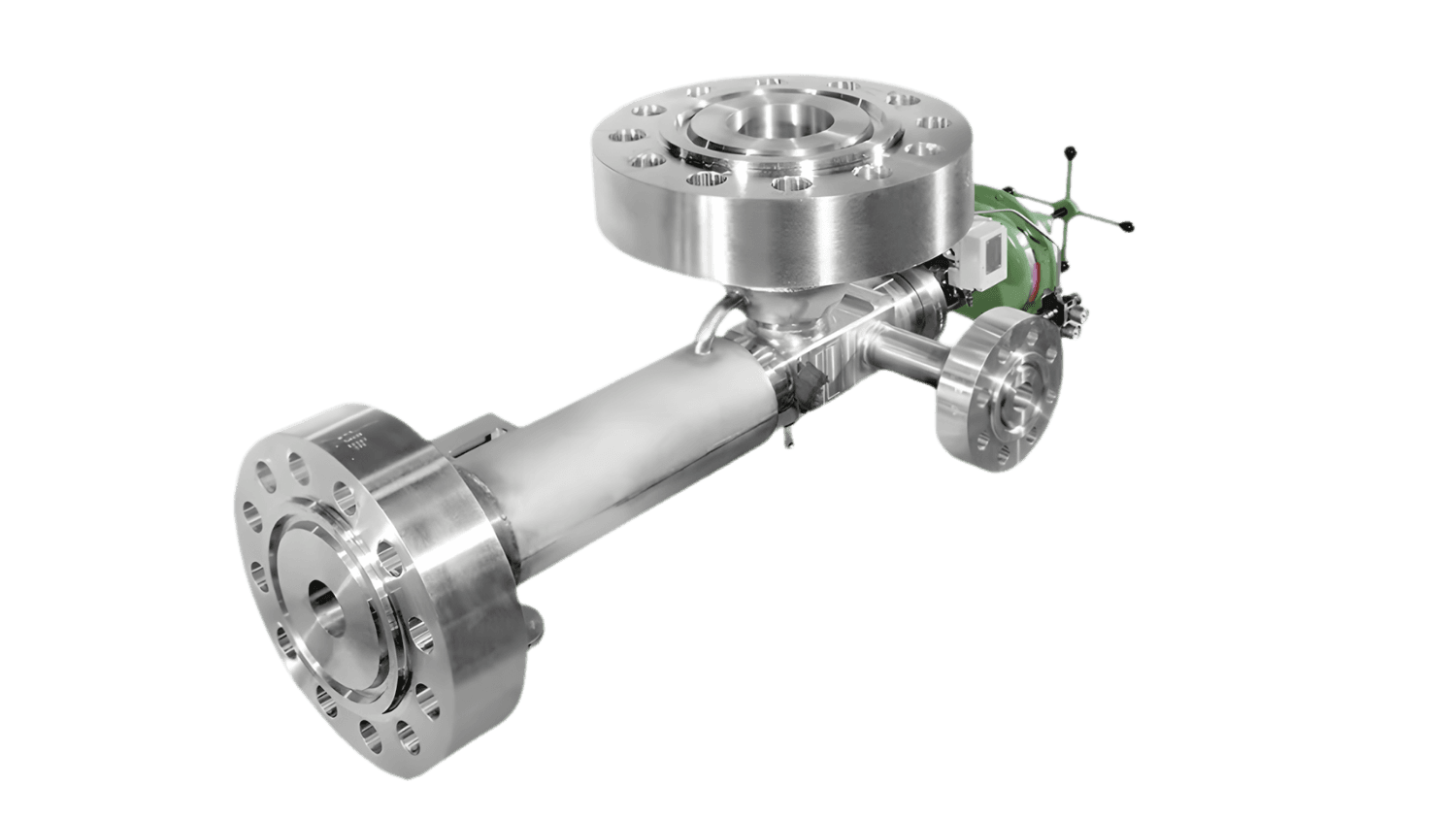
An ejector (also called jet pump or eductor) is a pumping device that uses a high-pressure motive fluid to create suction and transport another fluid, all without any mechanical drive or moving parts.
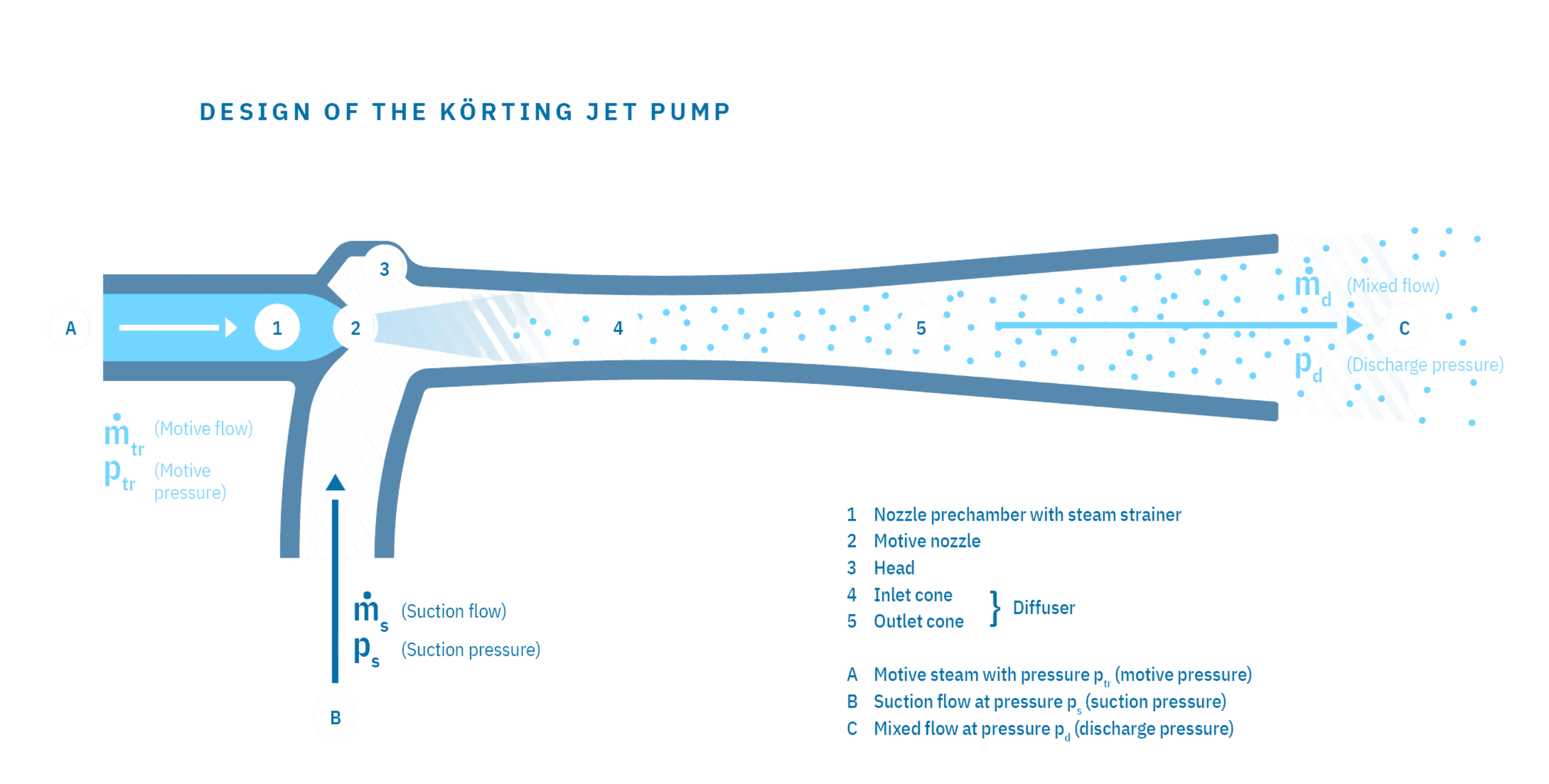
The motive fluid (typically seawater from the ship's fire or ballast pumps) is accelerated through a nozzle, creating a low-pressure zone that draws in the suction fluid. Both flows mix in the diffuser and exit at the discharge pressure.
This elegant simplicity makes ejectors the preferred choice for shipbuilding: no electrical connections in hazardous areas, no maintenance, no risk of dry-running damage, and exceptional reliability in the harshest conditions.
How ejectors work
The motive fluid (A) enters the nozzle prechamber and accelerates through the motive nozzle. This creates a low-pressure zone in the head that draws in the suction flow (B).
Both flows mix thoroughly in the diffuser with high turbulence, creating a homogeneous mixture. The combined flow exits at the discharge pressure (C).
Key components:
- Nozzle prechamber with strainer
- Motive nozzle
- Suction head
- Inlet cone (diffuser)
- Outlet cone (diffuser)
Types of ejectors
Körting manufactures ejectors for every marine application. Each type is optimised for its specific purpose and custom-designed for your project requirements.
The most common ejector type. Used for bilging, stripping and ballasting of bilges, ballast tanks, engine rooms, chain lockers, bow thrusters, cofferdams and forepeaks. Driven by seawater from the ship's fire or ballast pumps.
Shipboard applications
Körting ejectors are used throughout the vessel for bilging, ballasting, stripping, ventilation and heating applications. They are driven by existing pumping systems, typically the ship's fire main or ballast pumps.
Bilges
Engine room bilges, cargo hold bilges
Ballast tanks
Fore peak, aft peak, double bottom tanks
Chain lockers
Anchor chain storage compartments
Bow thrusters
Thruster tunnel drainage
Dredging
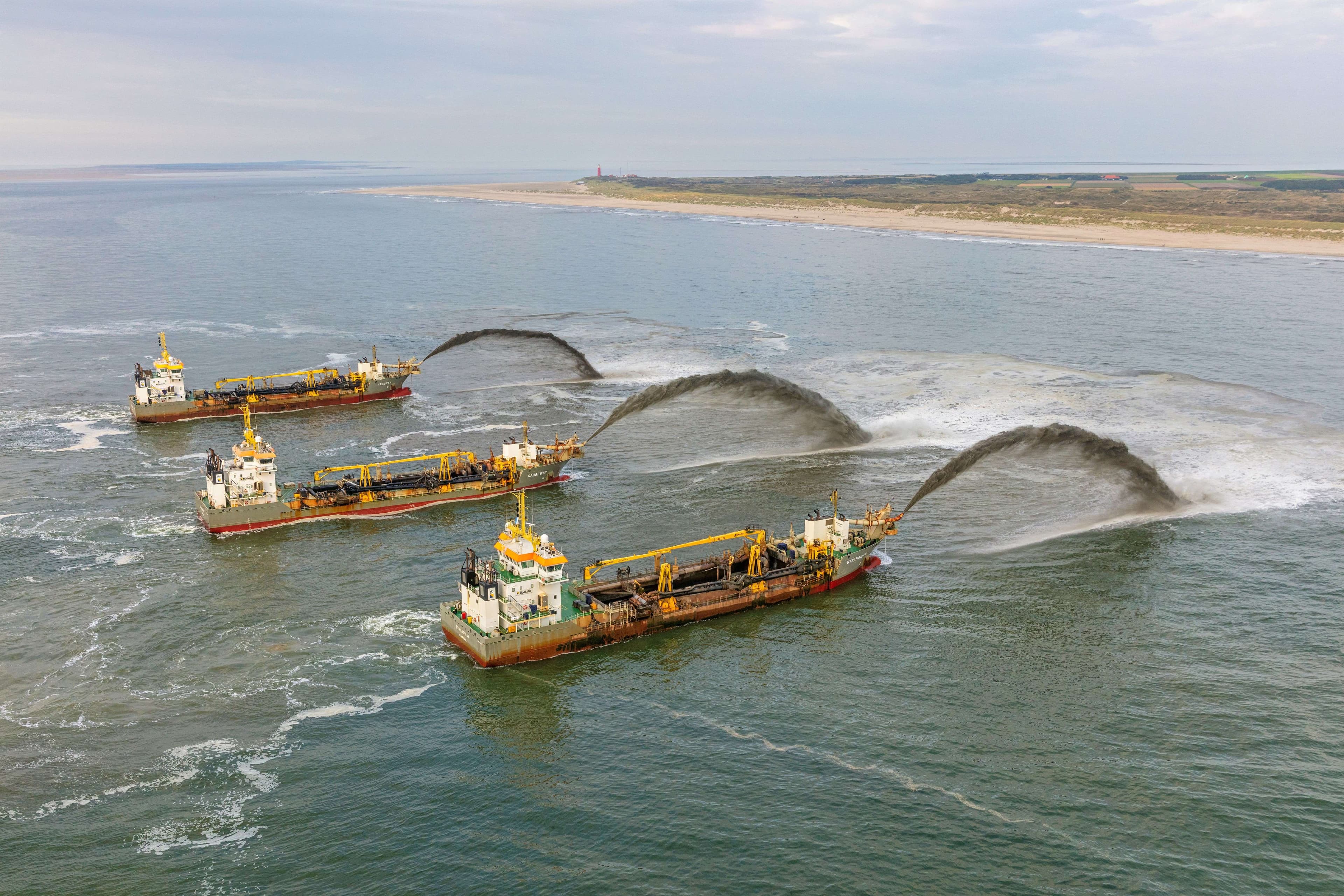
Trailing suction hopper dredgers
Void spaces
Double hull spaces, wing tanks
Classification society approvals
Körting ejectors are approved by all major classification societies worldwide. Körting is the only company fully approved by Germanischer Lloyd for self-inspection.
GL
Germanischer Lloyd
DNV
Det Norske Veritas
LR
Lloyd's Register
BV
Bureau Veritas
ABS
American Bureau of Shipping
Class NK
Nippon Kaiji Kyokai
RINA
Registro Italiano Navale
CCS
China Classification Society
Materials & construction
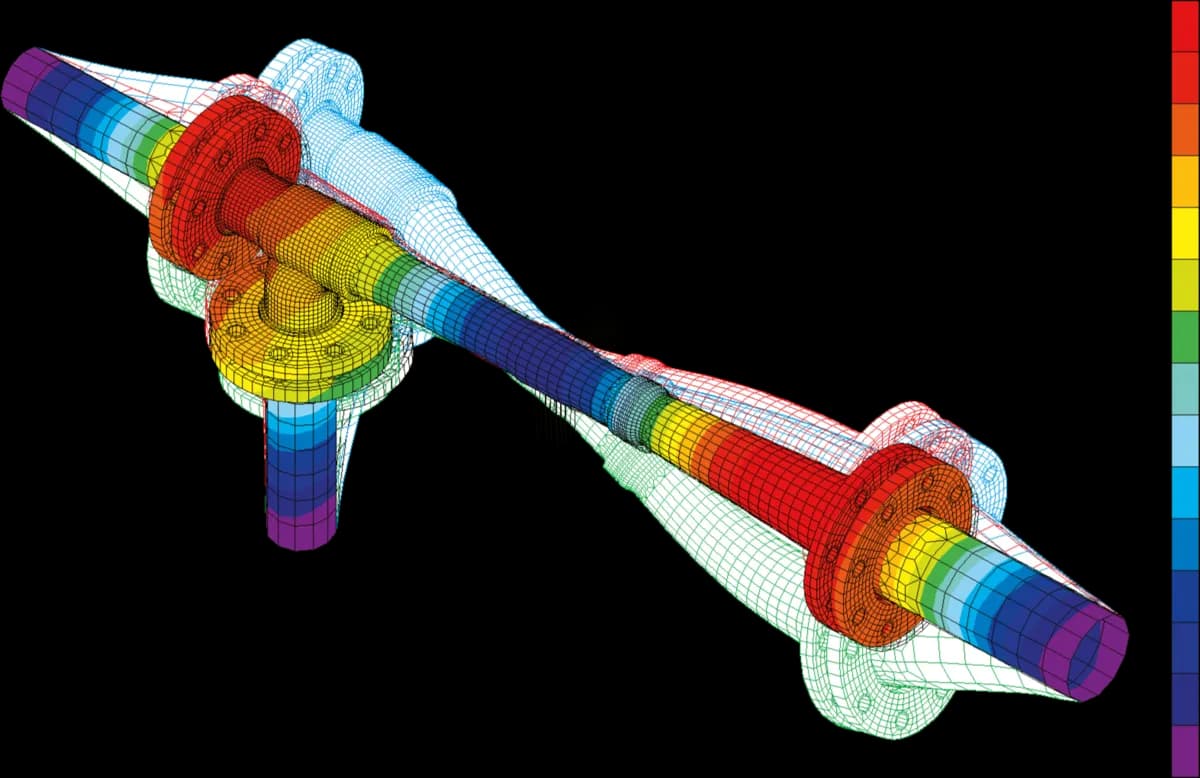
Körting ejectors are manufactured from high-quality cast bronze (CC480K / CC483K), materials fully resistant to the chemical attack of seawater. The bronze is lightweight yet extremely strong, as confirmed by extensive shock, vibration and blast testing.
Every ejector is custom-designed to match your specific operating conditions. Rather than selecting from standard catalogue sizes, each ejector is individually designed to ensure optimal efficiency and cavitation-free operation.
Connection options:
- Flanges: EN, ASME, JIS, VG or custom
- Hose couplings: Storz, Guillemin, etc.
- Quick couplings: Straub-Grip, Norma, etc.
- Threaded connections
Frequently asked questions
An ejector uses a high-pressure motive fluid to create suction and transport another fluid, with no moving parts. A pump uses mechanical action (impellers, pistons, etc.) to move fluid. Ejectors are simpler, more reliable, and maintenance-free, but less energy-efficient than pumps for high-volume applications.
Körting ejectors typically require motive fluid pressure between 3-10 bar, depending on the application. The exact pressure depends on the suction lift, discharge head, and flow rate required. Each ejector is custom-designed to match your available motive pressure.
Yes, unlike mechanical pumps, ejectors cannot be damaged by running dry. They simply stop pumping when flow ceases. This makes them ideal for bilge and emergency drainage applications where dry-running is common.
Körting ejectors are manufactured from high-quality cast bronze (CC480K / CC483K), which is fully resistant to seawater corrosion. Special materials are available for specific applications. All ejectors undergo shock, vibration and blast testing.
With no moving parts to wear out, Körting ejectors can operate for the lifetime of your vessel without maintenance. Many ejectors installed 40+ years ago are still in daily operation.
Yes, Körting ejectors are approved by all major classification societies including GL, DNV, Lloyd's Register, Bureau Veritas, ABS, Class NK, RINA, and CCS. Körting is the only company fully approved by Germanischer Lloyd for self-inspection.
Need ejectors for your project?
Contact us for technical consultation, specifications or a quote. We'll help you select the right ejector for your application.
