Metalworking
De-oiling centrifuges and coolant management solutions for metalworking operations. Recover cutting oil, reduce costs, improve sustainability.
Oil recovery
Recover up to 99% of cutting oil from metal chips for reuse in production.
Cost reduction
Lower oil purchasing costs and reduce waste disposal expenses significantly.
Sustainability
Meet environmental goals by minimizing oil waste and reducing your carbon footprint.
Low maintenance
Robust construction with minimal wear parts for reliable long-term operation.
The chip de-oiling challenge
Metal chips from CNC machining, turning, and grinding operations are saturated with valuable cutting oil. Without proper treatment, this oil is lost when chips are sent for recycling, costing you money twice over: once for the lost oil, and again for hazardous waste disposal.
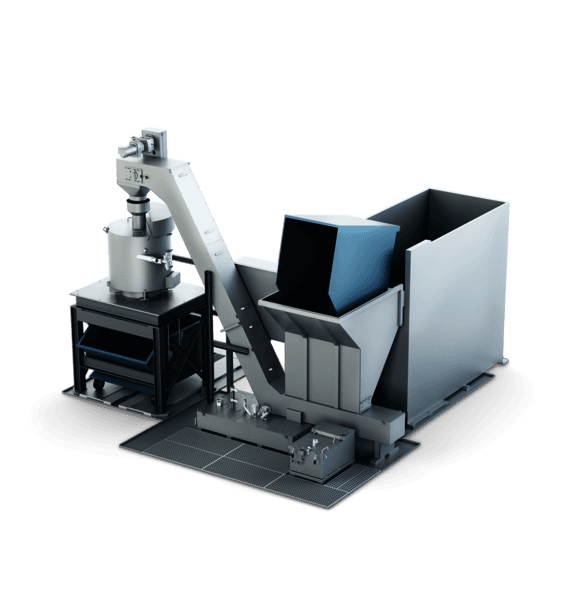
CEPA de-oiling centrifuges solve this problem by spinning chips at high speed to extract the oil. The recovered oil goes back into production, and the dry chips are worth more as scrap metal.
Equipment for metalworking
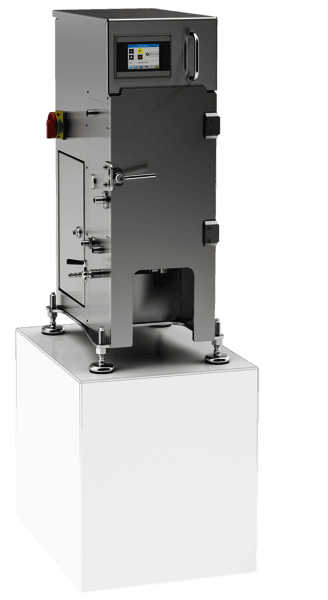
CEPA centrifuges for chip de-oiling and coolant management.
Compatible materials
CEPA de-oiling centrifuges handle all common metal chip types.
Steel chips
All grades including stainless
Aluminum chips
Cast and wrought alloys
Brass & bronze
Non-ferrous metals
Cast iron
Gray and ductile iron
Specific use cases
How our equipment solves real metalworking challenges.
CNC machining chip recovery
Challenge
High-volume CNC operations generate tons of oily chips daily. Oil lost with chips is a direct cost, and oily chips are expensive hazardous waste.
Solution
Automatic de-oiling centrifuges process chips continuously alongside production. Oil returns to coolant system, dry chips go to scrap.
CEPA automatic centrifuges
Aluminum chip processing
Challenge
Aluminum chips trap more oil than steel due to their shape. Burning aluminum with oil creates toxic fumes at the foundry.
Solution
Centrifugal force removes oil even from complex chip geometries. Dry aluminum commands premium scrap prices.
CEPA de-oiling centrifuges
Small batch operations
Challenge
Job shops with varied production can't justify automated systems, but still waste money on oily chip disposal.
Solution
Manual basket centrifuges handle small batches economically. Load, spin, unload. Simple operation, quick ROI.
CEPA manual centrifuges
Grinding swarf treatment
Challenge
Fine grinding swarf holds more oil by volume than chips. Mixed with coolant, it's difficult to handle and dispose.
Solution
Centrifuges separate oil from fine swarf effectively. Recovered oil can be reused or sold.
CEPA de-oiling centrifuges
Coolant clarification
Challenge
Cutting fluids accumulate fine particles and tramp oil that reduce tool life and surface finish quality.
Solution
High-speed centrifuges remove fine particles and separate tramp oil, extending coolant life significantly.
CEPA tubular centrifuges
Environmental compliance
Challenge
Oily chips above threshold limits require hazardous waste handling. Regulations are tightening and costs increasing.
Solution
De-oiling to <2% residual typically reclassifies chips as non-hazardous, dramatically reducing disposal costs.
CEPA de-oiling centrifuges
Return on investment
Most metalworking operations see payback on a de-oiling centrifuge within 6-18 months. The exact ROI depends on your chip volume, oil type, and current disposal costs.
We can help you calculate the business case for your specific situation. Contact us for a no-obligation assessment.
Savings sources:
- Recovered oil returned to production
- Higher scrap value for dry chips
- Reduced hazardous waste disposal costs
- Lower new oil purchasing requirements
- Avoided environmental compliance issues
Frequently asked questions
CEPA de-oiling centrifuges achieve residual oil content as low as 0.5-2% depending on chip geometry and oil viscosity. This represents oil recovery rates of up to 99% compared to simple drainage.
Our centrifuges handle all common metalworking fluids including straight cutting oils, soluble oils (emulsions), semi-synthetic, and synthetic coolants. The best results are achieved with neat oils.
Cost savings come from multiple sources: recovered oil is reused in production, dry chips command higher scrap prices, waste disposal costs are reduced, and you avoid potential environmental fines.
Manual centrifuges process batches of 15-60 kg chips. Automatic centrifuges offer continuous operation with capacities from 100 kg/h up to several tons per hour for high-volume operations.
Yes, properly centrifuged oil is typically clean enough for direct reuse in production. For critical applications, an additional filtration step can be added to remove fine particles.
De-oiled chips with residual oil content below 2% are generally classified as non-hazardous waste in most jurisdictions, simplifying disposal and reducing costs. Check your local regulations for specific limits.
Calculate your chip de-oiling ROI
Contact us for a no-obligation assessment of your metalworking fluid management needs.
